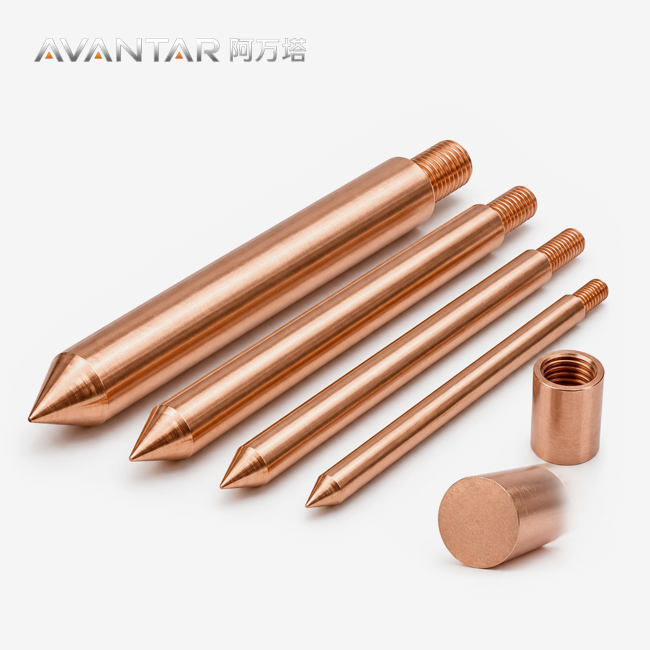
Copper Bonded Ground Rod
2. Copper layer thickness: 0.254 mm (10 mil) minimum.
3. Diameters: 1/2, 5/8 or 3/4 inch.
4. Lengths: 1.2, 1.5, 2.4 or 3 m; custom lengths available.
5.Lead Time: 7–10 working days
6.Customization: Flexible OEM/ODM options
Copper Bonded Ground Rod for Substations, Solar Farms & Telecom Sites — Direct Factory Supply
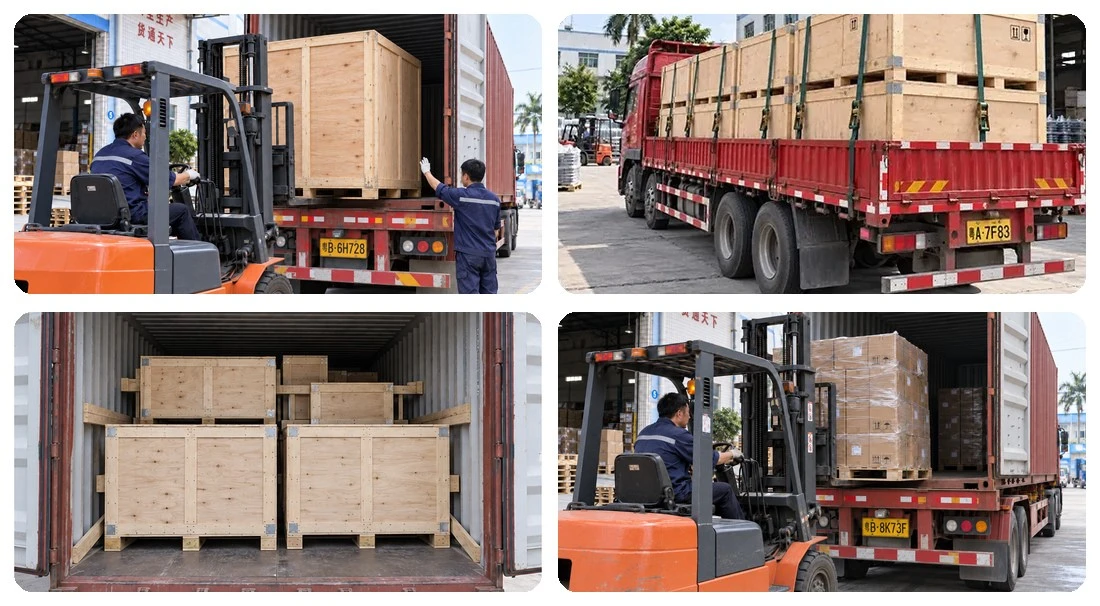
Avantar's Copper Bonded Ground Rod is a two-metal earthing electrode made up of a high-tensile steel core and a molecularly bonded copper layer that is at least 0.254 mm (10 mil) thick and ≥99.9% pure. UL 467, IEC 62561-2, and RoHS standards are met, and it comes in lengths from 1.2 m to 3 m and widths of 1/2", 5/8", and 3/4". The tensile strength is at least 600 MPa, which means it can be used for reliable driving in hardened soil. Avantar makes products and ships them straight from its factory in Guangdong to customers in more than 58 countries.
What Is a Copper Bonded Ground Rod?
This is an earthing electrode that can be used in electrical installations. It protects against lightning shocks and fault currents. It's not a solid copper rod. A core made of high-strength steel handles the mechanical stress, and a coating made of pure copper conducts electricity and resists corrosion.
This chemical bonding method holds the copper layer tightly to the steel core, so they don't come apart while the motor is running. This structure works better mechanically than solid copper bars and is much more resistant to corrosion underground than regular galvanised steel electrodes.
Key Product Features
Copper Layer Held Together by Molecules
The copper cladding is not just electroplated; it is bound at the molecular level. Even if you use a hammer or hydraulic driver to drive the rod into hard or rocky ground, the layer stays in place.
High-Tensile Steel Core
The steel core doesn't bend or deform during fitting because it has a tensile strength of at least 600 MPa. The rod won't bend when you drive it deep into hard or layered dirt.
Corrosion Resistance in the Ground
The 0.254 mm copper layer keeps the steel core from rusting in places underground. This is especially important near the coast, in areas with lots of clay, or where the soil is very wet.
Different End Styles
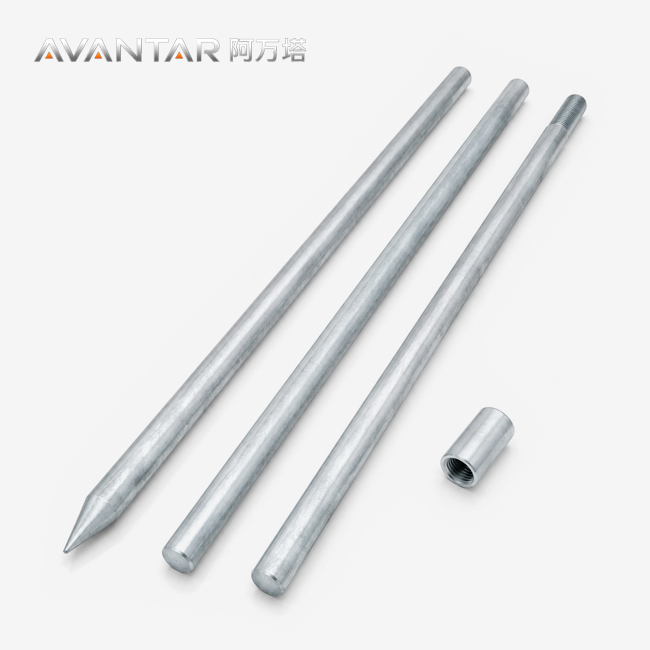
There are rods with threaded ends for coupling and pointed ends for direct driving. Threaded models let you connect several rods in a row to get to the depth your grounding grid design needs.
Application Scenarios
This grounding rod is used across a wide range of electrical and infrastructure projects:
- Substations — Fault current dissipation and safety grounding
- Solar farms — PV inverter and mounting structure grounding
- Wind energy sites — Turbine and control room earthing
- Telecom towers — Lightning protection and equipment safety
- Industrial facilities — Equipment grounding networks
- Building infrastructure — Foundation and structural earthing systems
The Copper Bonded Ground Rod's diameter and length options make it adaptable to different soil resistivity conditions and grounding grid layouts, from large substation projects to distributed solar installations.
Technical Specifications
| Parameter | Value |
|---|---|
| Standard | UL 467 / IEC 62561-2 |
| Copper Layer Thickness | ≥ 0.254 mm (10 mil) |
| Copper Purity | ≥ 99.9% |
| Diameter Options | 1/2" (12.7 mm), 5/8" (15.9 mm), 3/4" (19 mm) |
| Length Options | 1.2 m / 1.5 m / 2.4 m / 3 m |
| Custom Length | Available on request |
| Tensile Strength | ≥ 600 MPa |
| End Style | Pointed tip / Threaded end |
| Certifications | UL 467, IEC 62561-2, RoHS |
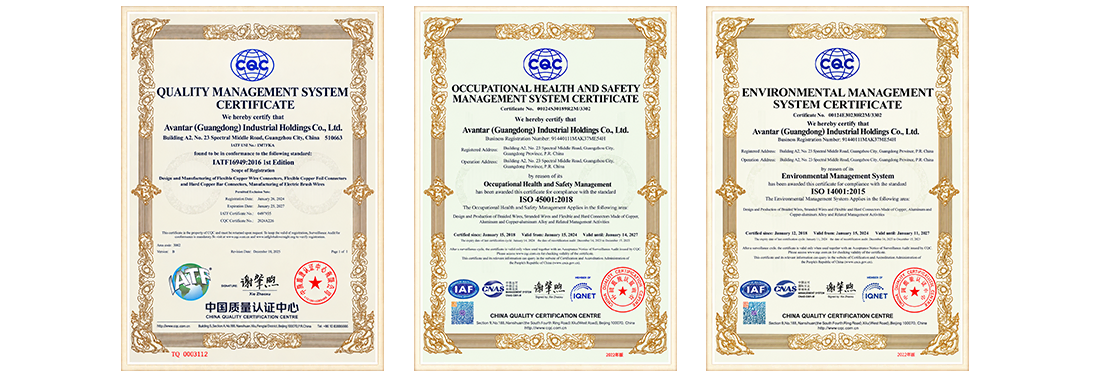
Each export shipment is accompanied by a certificate of origin and official UL and IEC test reports for customs clearance and tender submission.
Custom Design Options
Avantar supports OEM and ODM customization based on your project drawings, soil conditions, or specification requirements. The following parameters can be adjusted:
- Rod diameter — Standard sizes or a non-standard diameter
- Rod length — Custom lengths beyond the standard 1.2–3 m range
- End treatment — Pointed tip for direct driving, or threaded end for deep-coupled installations
- Copper layer thickness — Can be specified beyond the standard 0.254 mm minimum for aggressive soil environments
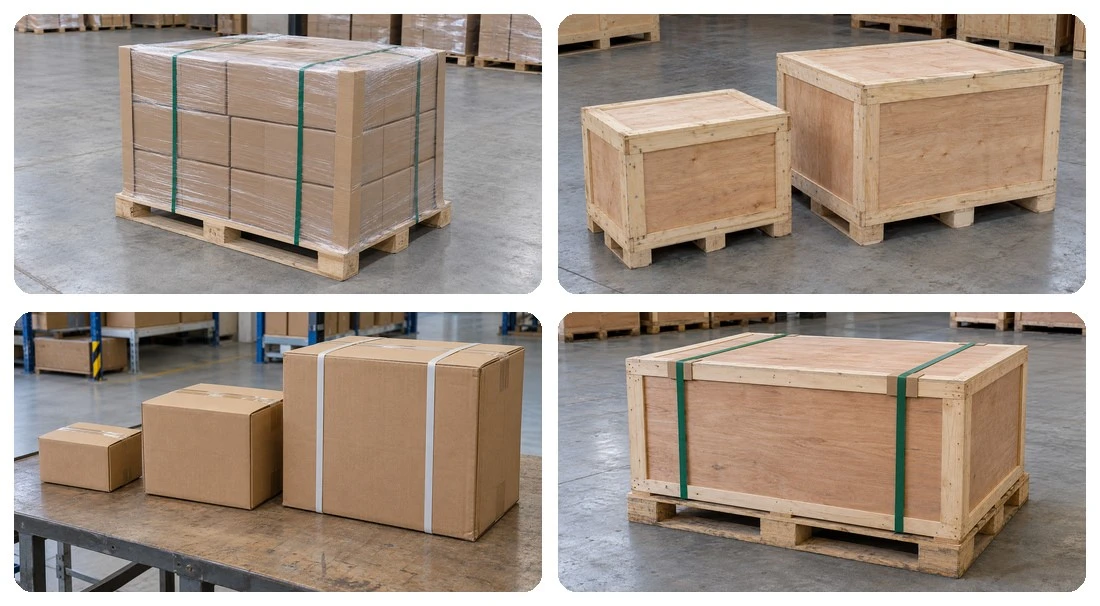
- Packaging format — Anti-oxidation bundling or wooden-case packaging based on transit requirements
To request a custom configuration, share your soil resistivity data, grounding grid layout, and local standard requirements so Avantar can provide sizing and specification recommendations.
How to Specify?
When placing an order or requesting a quotation, confirm the following parameters to avoid specification errors:
- Rod diameter — 1/2", 5/8", or 3/4"
- Rod length — Standard or custom
- Copper-layer thickness — Minimum 0.254 mm unless a thicker layer is specified
- End style — Pointed or threaded
- Applicable standard — UL 467 for North American projects, IEC 62561-2 for international projects
- Quantity — Standard MOQ is 100 pieces per model
- Delivery requirement — Lead time is 7–15 working days for standard catalog items
For large-scale projects such as solar farms, substation tenders, or telecom rollouts, finished-goods video inspection before shipment or third-party witness inspection can be arranged on request.
FAQ
Q: What's the difference between a service and bars made of solid copper or steel that has been galvanised?
A: The item is made of a high-tensile steel core and molecularly bonded copper cladding that is at least 99.9% pure. The steel core drives better than solid copper, and the copper coating protects against rust better than galvanised steel. The copper coating also costs less than full solid-copper options. Copper cladding must be at least 0.254 mm (10 mil) thick, and it must have a tensile strength of more than 600 MPa.
Q: Are you a straight manufacturer or a trade company?
A: It is a direct factory in Guangdong, China. Some of the things that are done in-house are pre-treating the steel core, molecular copper-bond coating, end threading or pointing, checking the dimensions, and adhesion testing. Direct sourcing skips the middleman's markup and lets you get technical help faster for big tasks.
Q: What factors should I look at before buying for different types of soil?
A: The rod's diameter, its driven length, the copper cladding's thickness (UL 467 says it must be at least 0.254mm), the type of end (pointed or threaded), and whether a special length is needed. For soils that are near the coast or are very corrosive, please check your copper layer integrity needs and send your soil resistivity data so that the team can help you with sizing.
Q: Q: Do you have any certification papers?
A: As per UL 467, IEC 62561-2, and RoHS, the rods are safe. A certificate of origin and real UL and IEC test results are sent with every export shipment. For projects of tender grade, it is possible to set up a video review of the finished goods or a third-party witness examination before they are shipped.
Q: What is your minimum order quantity (MOQ), wait time, and packing policy?
A: The normal MOQ for each model is 100 pieces. Normal catalogue items take 7–15 business days to arrive after an order is confirmed. Goods are packed in anti-oxidation wrapping or hardwood cases so that the surface doesn't rust while they're being shipped. You can get quotes on EXW, FOB, and other terms of international trade.
Q: Can I try some samples first before I buy a lot?
A: Yes. Buyers who want to do lab or site evaluation can get samples. Before you buy in bulk, you can also look at test records for copper thickness, tensile strength, and bond adhesion.
Contact Us
Email [email protected] for a quote, samples, or technical questions about your Copper Bonded Ground Rod grounding project. We're happy to help.
Learn about our latest products and discounts through SMS or email