Tinned Copper Busbar
2. Thickness: 3–12 mm. Width: 20–120 mm.
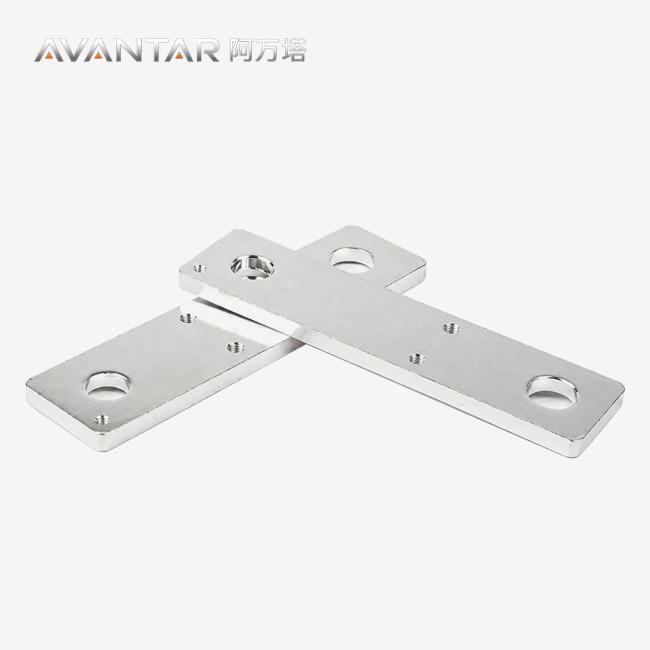
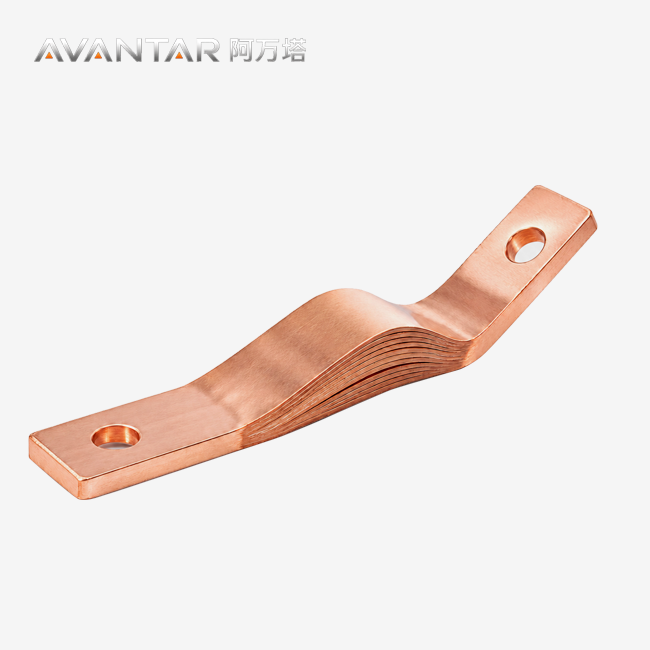
3. Forms: flat, bent or punched bars.
4. Dimensions and hole patterns: to customer drawings.
5.Lead Time: 7–10 working days
6.Customization: Flexible OEM/ODM options
Tinned Copper Busbar for Switchgear & Distribution Panels — T2 Pure Copper, Custom Profiles
Avantar Tinned Copper Busbar is manufactured from T2 pure copper (≥99.90% Cu) with 100% IACS conductivity. 3–8 μm electrolytic tin plating ensures steady contact resistance throughout the assembly life and protects against oxidation. Standard profiles are available with a thickness of 3–12 mm and a width of 20–120 mm. On CNC machines they can be cut to lengths of up to 6,000 mm. They are compliant with ISO 9001:2015, CE, RoHS, IEC 61439-1/-2, ASTM B187 and EN 13600 standards. Normally it takes 7 to 15 business days to ship from ports of Shenzhen and Guangzhou.
What Is a Tinned Copper Busbar?
The item is a flat solid copper wire with electrolytic tin coating on the outside. In energy storage systems, distribution panels, switchgear cabinets and busbar chambers, enormous amounts of electricity are transferred between parts.
The tin coating reduces the oxidation of the copper, lowers the resistance at the contact points and provides a good connection between the copper and aluminium terminals. These features make it a popular choice for low voltage distribution applications inside and outside.
Key Product Features
high conductivity copper core
Base material shall be T2 electrolytic copper (same as C11000) and shall contain not less than 99.90% copper. That offers the IACS 100% conductivity, so that it can carry the maximum amount of current with minimum heat loss.
Electrolytic Tin Plating
Tin is deposited electrolytically to a thickness of 3–5 εm for conventional indoor use and 5–8 εm for coastal or high-humidity environments. The plating is equally distributed over the inside walls of the holes and the bending arcs protecting the surface.
Rigid, heavy build
The shape of the solid copper bar makes the machine stay stable easily. It holds its shape when mounted securely, vibrated and heated and cooled several times. This is critical for long term performance in enclosed switchgear.
CNC cutting and accurate hole placement
The punch accuracy is ±0.1 mm. The permitted angle of bending is $\pm$0.5°. Cutting length has a range of ±0.5 mm. Tolerances are such that straight panels can be assembled without any further correction.
Custom Design Options
Your application may require specific profiles, hole patterns, or surface treatments that standard stock cannot match. Avantar supports drawing-based production for OEM switchgear and distribution panel builders.
Available custom configurations include:
- Profiles: L-shape, U-shape, T-shape, Z-bend, U-bend, offset bend, or any customer-defined profile
- Hole types: Round holes, slotted holes, custom bolt patterns
- Surface finish: Tinned, bare copper, or nickel-plated
- Bar shape: Flat bar, bent bar, punched bar
- Length: Up to 6,000 mm per piece
You can submit panel layout drawings directly. The production workflow runs from drawing review and fabrication drawing approval through first-article sample (5–7 days) to mass production with full dimensional inspection.
Technical Specifications
| Parameter | Details |
|---|---|
| Base Material | T2 pure copper (C11000 equivalent, ≥99.90% Cu) |
| Conductivity | 100% IACS |
| Surface Finish | Tinned / Bare / Nickel-plated |
| Tin Plating Thickness | 3–5 μm (indoor) / 5–8 μm (harsh environment) |
| Thickness Range | 3 mm – 12 mm |
| Width Range | 20 mm – 120 mm |
| Maximum Length | 6,000 mm |
| Shape Options | Flat, L-shape, U-shape, T-shape, Z-bend, Offset bend |
| Hole Options | Round, slotted, custom patterns |
| Punching Accuracy | ±0.1 mm |
| Bending Angle Tolerance | ±0.5° |
| Cutting Length Tolerance | ±0.5 mm |
| MOQ | 50 pieces per specification |
| Lead Time | 7–15 working days |
| Applicable Standards | ISO 9001:2015, CE, RoHS, REACH, ASTM B187, EN 13601, IEC 61439-1/-2, ASTM B545 |
Typical Current Ratings (Reference Values)
Current ratings are based on 70°C maximum conductor temperature and 30°C ambient temperature, free-air mounting.
| Size (T × W mm) | Typical Free-Air Current |
|---|---|
| 3 × 20 mm | 300 A |
| 4 × 30 mm | 500 A |
| 5 × 40 mm | 700 A |
| 6 × 50 mm | 900 A |
| 8 × 60 mm | 1,250 A |
| 10 × 80 mm | 1,700 A |
| 10 × 100 mm | 2,000 A |
Note: Current values decrease when Tinned Copper Busbars are installed inside enclosed cabinets. Vertical mounting adds approximately 5–10% extra current capacity. Custom ampacity calculation is available based on your actual enclosure structure.
How to Place an Inquiry?
Providing complete specifications upfront reduces revision cycles and shortens lead time. When sending an inquiry, please include:
- Dimensions — thickness (mm), width (mm), length (mm)
- Shape — flat, bent profile, or custom (attach drawing if available)
- Surface finish — tinned, bare, or nickel-plated; specify tin thickness if required
- Hole pattern — hole diameter, quantity, and position tolerances
- Quantity — pieces per specification and expected order frequency
- Compliance documents — any specific standards or third-party inspection requirements (e.g., MTR, SGS, BV, TÜV)
Material test reports and batch inspection certificates are provided with every export shipment. Third-party inspection can be arranged on request.

Applications
These copper conductors are used across power distribution and electrical infrastructure projects:
- Low-voltage switchgear — main busbars and sub-busbars in MCC and MDB panels
- Distribution boards and busbar chambers — primary current distribution paths
- Energy storage systems — battery pack interconnections and DC distribution
- Renewable energy projects — inverter output connections and combiner boxes
- Industrial power systems — motor control centers and transformer secondary connections
- Outdoor and coastal installations — where 5–8 μm tin plating provides added corrosion protection
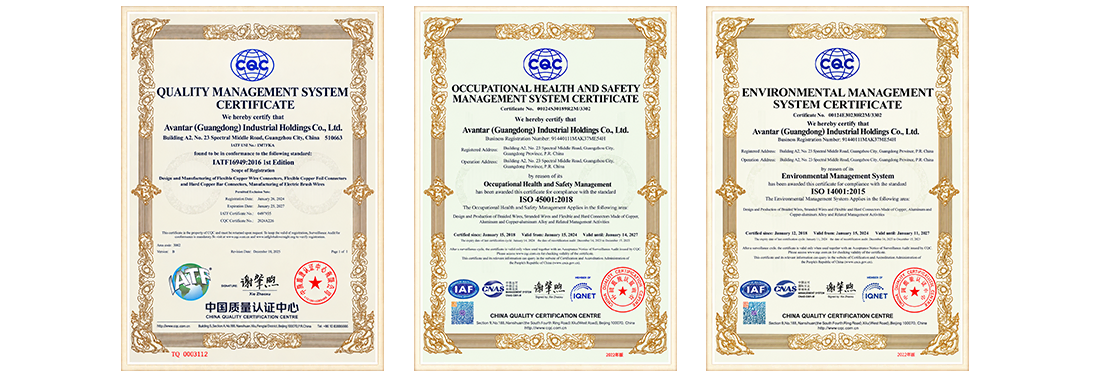
Quality Control & Certifications
Each production lot is subjected to a systematic inspection process before shipment, which includes spectrum analysis of raw material, conductivity testing, 100% dimensional inspection, XRF plating thickness measurement and salt-spray testing.
Products conform with ISO 9001:2015, CE, RoHS, REACH, ASTM B187, EN 13601, IEC 61439-1/-2 and ASTM B545. Material test reports and batch inspection certificates are included with every export shipment. Third-party inspection from SGS, BV, or TÜV can be arranged upon request.
FAQ
Q: How do I find out what grade of copper I have?
A: The main material is T2 electrolytic copper (C11000 equivalent), and it must have at least 99.90% copper to be fully conductive according to IACS. For busbar applications on switchboards and distribution panels, this grade is the norm that must be met.
Q: How strong are these busbars for LV distribution panels right now?
A: From 300 A (3x20 mm) to 2,000 A (10x100 mm), the current values are given in free air at 70 °C for the conductor and 30 °C for the air around it. Ratings drop inside cabinets that are closed off. The capacity goes up by about 5–10% if it is mounted vertically. We can make ampacity calculations that are specific to your enclosure and how it will be mounted.
Q: We want to know why the tin coating on copper busbars in switchgear cabinets is important.
A: Tin plating has a number of useful benefits when used on switches. In humid or seaside areas, it slows down the oxidation and corrosion of copper. When the bolt is tightened, the soft tin layer will bend, making a closer metal-to-metal contact. This keeps the contact resistance stable and lowers the chance of hot spots over time. It also keeps copper and aluminium terminals from touching each other, which stops galvanic corrosion at mixed-metal connections.
Q: Are you able to make custom CNC punched and formed busbars for OEM switchgear?
A: Yes. Avantar is an expert in drawing, CNC cutting, CNC bending, and tin plating. Accuracy of punching is ±0.1 mm, bending is ±0.5°, and cutting length is ±0.5 mm. It can do offset bends, Z-bends, U-bends, and custom hole patterns. After the drawing is confirmed, first item models are usually ready in 5 to 7 days.
Q: What kinds of certificates and test records are given for export orders?
A: The products are made in line with ISO 9001:2015, RoHS, REACH, ASTM B545, EN 13601, IEC 61439-1/-2, and ASTM B187. As part of quality control, spectrum analysis, conductivity testing, 100% dimensional checking, XRF plating thickness testing, and salt-spray testing are all done. Please find attached the MTR paperwork and certificates for the batch inspection. There is the option of a third-party review by SGS, BV, or TUV.
Q: What is the minimum order size, and how long is the lead time?
A: To be safe, the least amount you can order is fifty pieces. Standard Lead Time: 7–15 business days after confirmation of the drawing and payment. Short-term OEM partnerships backed by just-in-time (JIT) delivery plans. From the ports of Shenzhen and Guangzhou, you can ship goods by sea or air.

Contact Us
Send your drawings or specifications for Tinned Copper Busbar to [email protected]. We typically respond within one business day.
Learn about our latest products and discounts through SMS or email