Water-Based vs. Dry Powder Fire Extinguishers: Key Differences
Water-Based vs. Dry Powder Fire Extinguishers: Residue, Cleanup Costs and Re-Ignition Risks
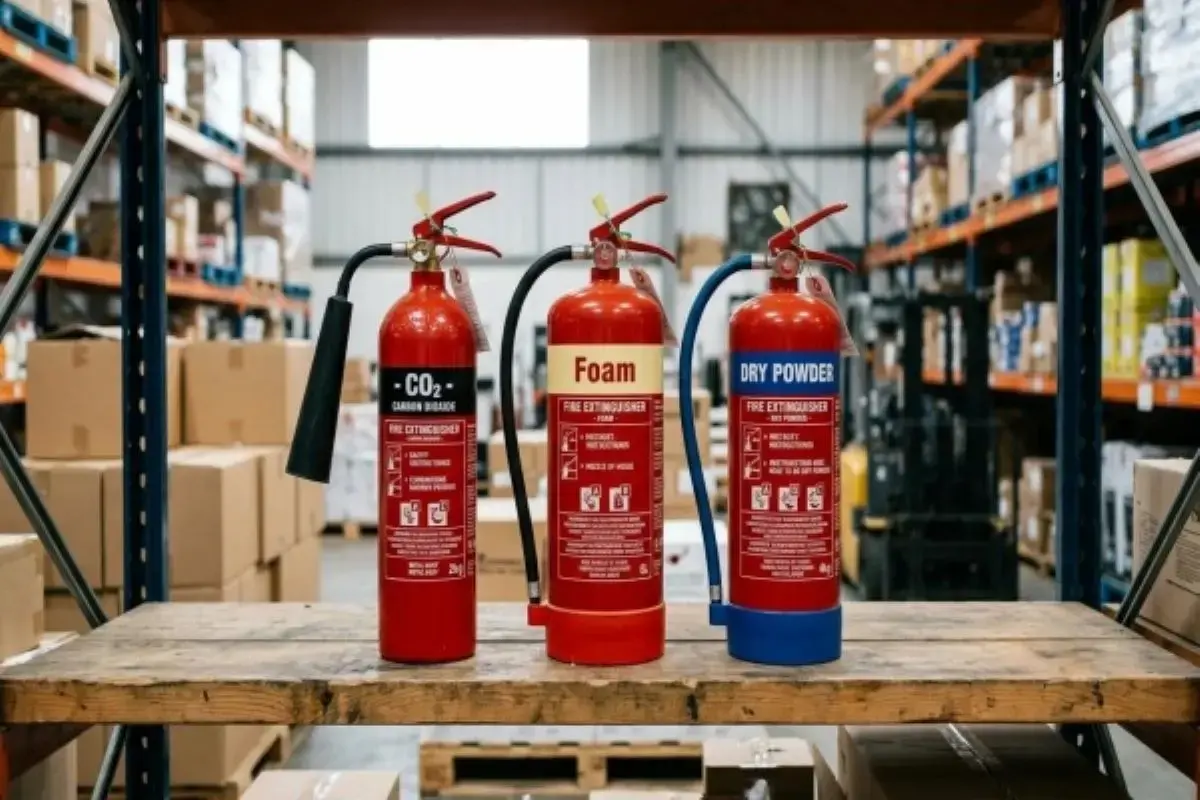

Choosing the right fire extinguisher involves more than comparing purchase prices or looking at how quickly visible flames disappear. The type of extinguishing agent also affects residue, post-discharge cleanup, equipment exposure and the potential for a fire to reignite.
Water-based and dry powder fire extinguishers use different extinguishing mechanisms and are designed for different fire risks. Water-based agents can provide cooling and, depending on their formulation, surface coverage. Dry powder extinguishers primarily interrupt the chemical reactions that sustain combustion and can provide rapid flame knockdown.
However, neither technology is suitable for every fire.
For businesses, distributors, facility managers and safety equipment buyers, understanding these differences is essential when selecting fire protection equipment.
This guide compares water-based and dry powder fire extinguishers, focusing on their extinguishing mechanisms, residue, cleanup requirements, re-ignition considerations and practical applications.
Quick Answer: Water-Based vs. Dry Powder Fire Extinguishers
What is the main difference between water-based and dry powder fire extinguishers?
Water-based fire extinguishers use water-based agents to absorb heat and cool burning materials. Depending on their formulation, they may also provide surface coverage that helps suppress combustion.
Dry powder fire extinguishers release chemical powders that primarily interrupt the combustion reaction, often producing rapid flame knockdown.
In general, water-based extinguishers may offer easier cleanup on compatible surfaces, while dry powder extinguishers can provide broad fire-class coverage when appropriately rated.
Neither type is universally better. The correct choice depends on the fire hazard, operating environment, equipment sensitivity and applicable safety requirements.
1. How Do Water-Based and Dry Powder Fire Extinguishers Work?
The main difference between these technologies is how they interrupt the combustion process.
How Water-Based Fire Extinguishers Work
AVANTARGROUP's Simple Water-Based Fire Extinguisher range uses water as a primary component of the extinguishing agent. Depending on the formulation, additional ingredients such as surfactants or foaming agents can improve wetting, spreading and surface coverage.
Their primary advantage is cooling.
Water absorbs heat from burning materials, helping reduce their temperature below the level required to sustain combustion.
Certain foam-forming formulations may also create a surface layer that helps restrict contact between combustible materials and oxygen.
These characteristics can make water-based extinguishers suitable for selected applications, provided the specific model has the appropriate fire rating.
Performance varies according to the formulation, discharge characteristics and certified fire rating.
How Dry Powder Fire Extinguishers Work
Dry powder extinguishers release finely divided chemical agents under pressure.
Common ABC dry chemical extinguishers use monoammonium phosphate, while BC extinguishers may use sodium bicarbonate or potassium bicarbonate compounds.
These agents primarily interrupt the chemical chain reactions that sustain combustion.
One advantage is their ability to provide rapid flame knockdown across multiple fire classes, depending on the extinguisher's certification.
However, dry powder provides limited cooling compared with water-based agents. Hot materials, embers and combustible surfaces may therefore remain capable of reigniting after visible flames have disappeared.
2. Residue Comparison: Water-Based vs. Dry Powder
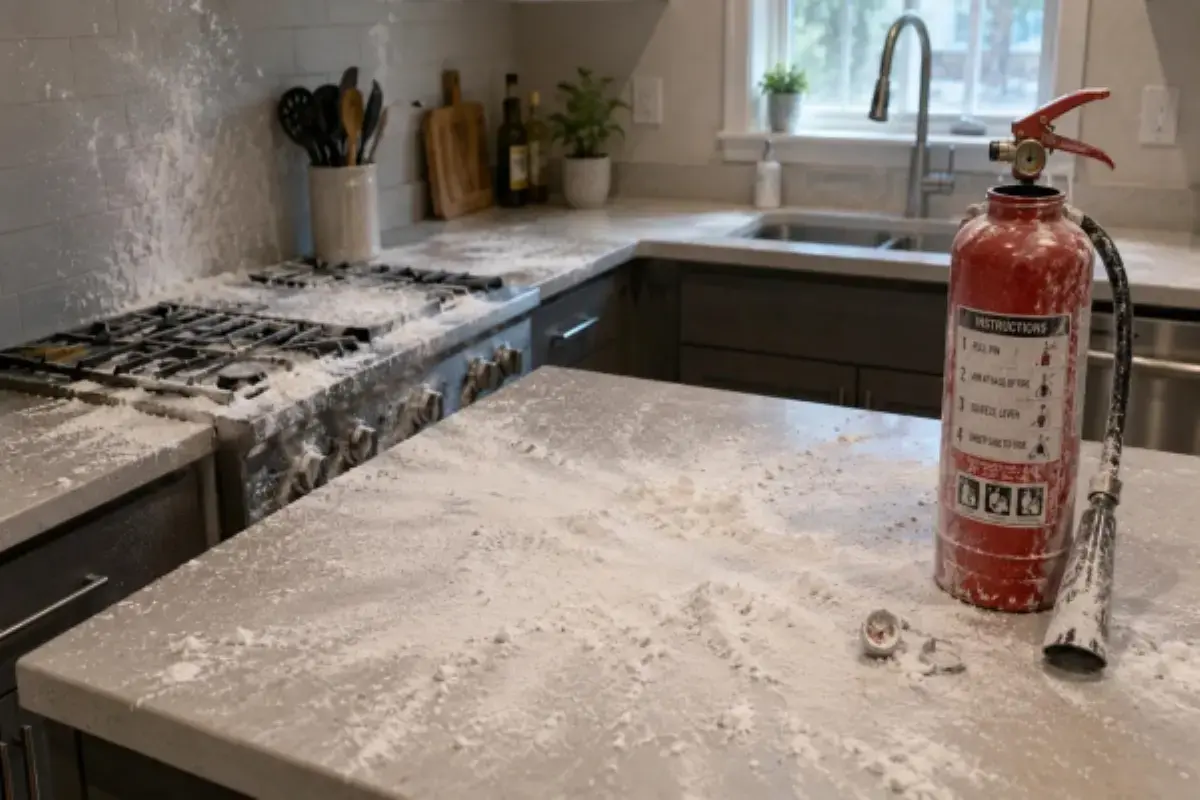
The type and distribution of residue are important considerations, particularly in offices, commercial facilities, vehicles and areas containing sensitive equipment.
What Does Dry Powder Leave Behind?
Dry chemical extinguishers can release fine powder across the discharge area.
The particles may settle on:
-
Floors and work surfaces
-
Furniture and storage areas
-
Ventilation systems
-
Computers and electronic equipment
-
Machinery and electrical control panels
Certain ABC powders containing monoammonium phosphate can become more difficult to remove when exposed to moisture. Under some conditions, their residues may contribute to corrosion of susceptible metal surfaces and electrical contacts.
The extent of potential damage depends on the extinguishing agent, exposure conditions, affected materials and how quickly appropriate cleaning takes place.
For this reason, powder discharge in an electronics-intensive environment should be followed by appropriate inspection and cleaning.
What Does Water-Based Foam Leave Behind?
Water-based extinguishers typically leave liquid or foam residue around the discharge area.
Depending on the formulation and the affected surface, this residue may be easier to remove using appropriate wiping or rinsing procedures.
However, water-based agents should not automatically be described as harmless, non-toxic or residue-free.
Their chemical composition, cleaning requirements and environmental characteristics must be assessed using the relevant product documentation and test evidence.
For businesses concerned about post-discharge cleaning, the specific formulation and its compatibility with surrounding materials are important selection factors.
Which Type Is Better for Sensitive Equipment?
Neither extinguisher should be assumed to cause no secondary damage.
Dry powder can enter equipment openings, ventilation paths and electrical enclosures. Water-based agents may introduce moisture or chemical residue that is also unsuitable for certain electronics.
For server rooms, control cabinets and other sensitive installations, dedicated protection solutions such as appropriately selected clean-agent systems may be more suitable.
The correct choice should be based on a site-specific fire risk assessment.
3. Which Fire Extinguisher Is Easier to Clean Up After Discharge?
Cleanup requirements depend on the amount of extinguishing agent released, the surface materials affected and the extent of contamination.
Nevertheless, water-based and dry powder extinguishers generally create different cleaning challenges.
Cleaning After Dry Powder Discharge
Dry powder cleanup may require several steps:
-
Restrict access to the affected area.
-
Follow appropriate safety procedures before entering the discharge zone.
-
Prevent unnecessary movement of powder into unaffected rooms.
-
Use suitable HEPA-filtered equipment where appropriate.
-
Clean affected surfaces using methods recommended for the specific powder.
-
Arrange inspection of sensitive equipment and machinery before returning them to service.
Electrical equipment should be isolated and assessed by qualified personnel where contamination is suspected.
In some situations, porous materials or equipment containing internal powder contamination may require specialist restoration.
Cleaning After Water-Based Discharge
Water-based residue may be easier to manage on compatible surfaces.
A typical cleaning process may involve:
-
Removing excess liquid or foam.
-
Wiping affected surfaces using suitable cleaning materials.
-
Following the manufacturer's recommendations for rinsing or disposal.
-
Allowing surfaces to dry.
-
Inspecting affected equipment before returning it to operation.
The actual process depends on the formulation, discharge volume and material compatibility.
Why Cleanup Costs Matter
The purchase price of an extinguisher represents only one part of its overall cost.
Businesses should also consider:
-
Cleaning labor
-
Specialist restoration services
-
Equipment inspection and repair
-
Replacement of contaminated materials
-
Business interruption
-
Disposal and environmental management requirements
In environments with valuable equipment, a fire extinguisher that creates less difficult-to-remove residue may offer operational advantages.
However, these potential savings should be evaluated alongside fire performance, certification and suitability for the actual hazard.
4. Re-Ignition Risk: Why Cooling Matters
Rapid flame knockdown does not always mean that a fire has been completely extinguished.
This distinction is important when comparing water-based and dry powder technologies.
Flame Knockdown vs. Complete Extinguishment
Dry powder extinguishers primarily interrupt the chemical reactions that maintain combustion.
They can suppress visible flames quickly, but the fuel or surrounding materials may remain hot.
If sufficient heat and combustible material remain, reignition may occur after the extinguishing agent has dispersed.
Water-based extinguishers provide an additional cooling mechanism.
By absorbing heat from combustible materials, water can help reduce the temperature of the fuel and surrounding surfaces. Certain foam-forming formulations may also provide surface coverage that helps limit exposure to oxygen.
These characteristics may help reduce the potential for reignition in suitable applications.
However, no extinguishing agent should be considered a guarantee against reignition.
What Should Be Checked After a Fire Is Extinguished?
After visible flames disappear:
-
Maintain a safe distance from the affected area.
-
Watch for signs of smoke, heat or renewed combustion.
-
Do not disturb hot materials unnecessarily.
-
Contact emergency services when required.
-
Follow the instructions of qualified fire safety personnel.
A fire should not be considered safe simply because visible flames have disappeared.
5. Which Fire Classes Can Each Extinguisher Handle?
Fire classification systems differ between regions. European EN classifications and North American classifications should not be treated as interchangeable.
The correct extinguisher must always carry the appropriate rating for the fire risk.
Understanding Fire Classes
| Fire Risk | European EN Classification | North American Classification |
|---|---|---|
| Ordinary solid combustibles | Class A | Class A |
| Flammable liquids | Class B | Class B |
| Flammable gases | Class C | Class B |
| Combustible metals | Class D | Class D |
| Energized electrical equipment | Not a separate fire class | Class C |
| Cooking oils and fats | Class F | Class K |
Class A: Ordinary Solid Materials
Class A fires involve ordinary combustible materials such as wood, paper, textiles and certain plastics.
Water-based extinguishers can be suitable for these applications because their cooling action helps reduce the temperature of burning materials.
Dry powder extinguishers can also provide effective flame knockdown when the specific model is appropriately rated.
Class B: Flammable Liquids
Class B fires involve flammable liquids.
Certain foam-forming water-based agents can help cover the liquid surface and restrict the release of flammable vapors.
Dry powder extinguishers can also be suitable for Class B applications when certified for that purpose.
The choice depends on the fuel, discharge characteristics and certified fire rating.
Gas and Electrical Fire Risks
Some dry powder extinguishers are rated for gas fires under the applicable classification system.
Water-based products should not be assumed suitable for gas fires or energized electrical equipment without specific certification.
For electrical applications, buyers must verify the exact model's relevant electrical safety testing and operating limitations.
Cooking Oil Fires
Cooking oil fires require particular care.
European Class F and North American Class K fires involve cooking oils and fats at high temperatures.
A conventional water-based foam extinguisher must not automatically be considered suitable for these fires.
Only models specifically tested and approved for the relevant cooking-oil fire class should be selected.
Using an unsuitable water-based product on hot cooking oil can create serious hazards.
6. Which Fire Extinguisher Is More Suitable for Different Applications?
The best extinguisher depends on the environment and the hazards present.
Offices and Commercial Buildings
Offices often contain computers, printers, furniture and electrical equipment.
Dry powder contamination can create additional cleanup and equipment inspection requirements after discharge.
Water-based extinguishers may be worth considering for compatible fire risks where their certified performance meets the building's requirements.
Sensitive electrical installations may require dedicated protection systems.
Warehouses and Industrial Facilities
Warehouses and production environments may contain different combinations of combustible solids, flammable liquids, gases and electrical equipment.
Dry powder extinguishers can be useful in applications where their certified fire ratings match the identified hazards.
Water-based extinguishers may be suitable for selected Class A risks, particularly where cooling and residue management are important.
Storage temperature is another consideration. Standard water-based models may require frost protection or specialized formulations for cold environments.
Vehicles and Fleet Operations
Vehicle interiors contain electronic systems, upholstery, plastics and other materials that may be affected by extinguishing agent residue.
A compact water-based extinguisher may be suitable for selected vehicle fire risks when its certification and operating instructions permit that application.
AVANTARGROUP offers a 500 mL product option designed for compact and portable use.
The appropriate extinguisher must always be selected according to the vehicle's fire risks and local regulations.
Commercial Kitchens
Commercial kitchens may contain ordinary combustible materials, electrical equipment and cooking oils.
Different hazards require different extinguishing solutions.
In particular, deep-fat cooking oil fires require a suitable Class F or Class K rated extinguisher, depending on the applicable regional standard.
The presence of a water-based formulation alone does not establish suitability for cooking oil fires.
Kitchen operators should follow local fire safety requirements and the recommendations of qualified fire protection professionals.
7. Total Cost of Ownership: What Should Buyers Consider?
For commercial buyers and distributors, evaluating the total cost of ownership provides a more complete picture than comparing unit prices alone.
Initial Purchase Price
Dry powder extinguishers are widely available and often have competitive purchase prices.
Water-based models may carry different pricing depending on the formulation, capacity, design and certification requirements.
Post-Discharge Cleanup
Businesses should consider the likely cleaning requirements associated with each agent.
Powder contamination may require specialist cleaning, particularly when sensitive equipment or ventilation systems are affected.
Water-based residue may be easier to remove from compatible surfaces, although appropriate cleaning and inspection are still necessary.
Equipment Damage and Downtime
The financial impact of an extinguisher discharge may extend beyond the affected area.
For example, contamination of electrical equipment, machinery or production controls can result in inspection costs, repairs and operational interruptions.
A complete purchasing assessment should therefore consider both fire protection performance and the potential consequences of discharge.
A Practical Purchasing Checklist
Before selecting a fire extinguisher, buyers should evaluate:
-
Certified fire ratings
-
Agent composition and compatibility
-
Operating temperature range
-
Residue and cleanup requirements
-
Electrical safety limitations
-
Maintenance and inspection requirements
-
Local certification and regulatory requirements
-
Initial purchase price and lifecycle costs
The most economical option is the one that provides appropriate protection while meeting the operational and regulatory requirements of the application.
8. How Should Distributors Choose the Right Fire Extinguisher Range?
Distributors and importers serve customers with different fire protection needs.
Rather than relying on one extinguisher technology for every application, a balanced product portfolio can help address a wider range of customer requirements.
Consider a Mixed-Inventory Strategy
A diversified inventory may include:
-
Water-based extinguishers for suitable and certified applications.
-
ABC dry powder extinguishers for compatible solid, liquid and other rated fire risks.
-
CO2 extinguishers for selected electrical and liquid fire applications.
-
Specialized Class F or Class K extinguishers for commercial cooking environments.
The exact product mix should reflect local regulations, market demand and the fire risks of the intended customers.
Why Product Customization Matters
For distributors entering new markets, product presentation and regulatory compliance are important commercial considerations.
OEM and ODM options can help businesses develop products under their own brands.
Customization may include:
-
Product labeling
-
Packaging design
-
Branding
-
Capacity configuration
-
Color options, subject to technical and regulatory requirements
AVANTARGROUP offers OEM and ODM customization options for its simple water-based fire extinguisher range, helping business partners explore product configurations for different market requirements.
Frequently Asked Questions
1. What is the main difference between water-based and dry powder fire extinguishers?
Water-based extinguishers primarily use cooling and, depending on the formulation, surface coverage to suppress fires. Dry powder extinguishers primarily interrupt the chemical reactions that sustain combustion. Their residue, cleanup requirements and suitable fire applications are also different.
2. Is dry powder extinguisher residue corrosive?
Certain ABC dry chemical powders, particularly those containing monoammonium phosphate, can contribute to corrosion under humid conditions. The degree of risk depends on the formulation, exposure conditions and affected materials. Prompt and appropriate cleaning is important.
3. Are water-based fire extinguishers easier to clean up?
Water-based extinguishers often leave liquid or foam residue that may be easier to remove from compatible surfaces. However, cleaning requirements depend on the agent formulation, discharge quantity and materials affected.
4. Do dry powder fire extinguishers increase the risk of reignition?
Dry powder extinguishers can suppress flames rapidly but generally provide limited cooling. Hot fuel, embers or surfaces may remain capable of reigniting. The actual risk depends on the fire type, fuel conditions and extinguishing performance.
5. Can water-based extinguishers be used on electrical equipment?
Only when the specific model has been tested, certified and approved for the relevant electrical application. Buyers should check the product's documentation and operating limitations before use.
6. Can water-based extinguishers be used on cooking oil fires?
Not automatically. Cooking oil fires require extinguishers specifically tested and rated for the applicable Class F or Class K fire classification. Conventional water-based foam should not be assumed suitable.
7. Which extinguisher is better for offices and commercial buildings?
The answer depends on the building's fire risks, electrical installations, equipment sensitivity and applicable regulations. Water-based extinguishers may offer cleanup advantages in compatible applications, while dry powder extinguishers remain useful for other certified fire risks.
8. Can distributors order private-label water-based fire extinguishers?
AVANTARGROUP offers OEM and ODM customization options for its simple water-based fire extinguisher range. Interested distributors and importers can contact the company to discuss available capacities, branding, packaging and market-specific requirements.
Conclusion: Choose Based on Fire Risk, Not Just Purchase Price
Water-based and dry powder fire extinguishers each have advantages and limitations.
Water-based products can offer cooling benefits and potentially simpler cleanup in suitable applications. Dry powder extinguishers can provide rapid flame knockdown and broad fire-class coverage when appropriately rated.
The right decision should consider the fire hazard, certified performance, residue, equipment sensitivity, storage conditions and local regulatory requirements.
For distributors, importers and commercial buyers, selecting the right product range is an important part of building an effective fire protection strategy.
AVANTARGROUP offers simple water-based fire extinguisher solutions in 500 mL, 6 L and 9 L capacities, together with OEM and ODM customization options.
To discuss product information, available specifications, technical documentation or potential distribution cooperation, contact our team:
Email: [email protected]
Website: https://www.avantargroup.com/energy-industrial-safety
About AVANTA RGROUP
AVANTAR (Guangdong) Industrial Holdings Co., Ltd. supplies industrial and fire safety solutions to international business partners.
Its product portfolio includes simple water-based fire extinguishers in multiple capacities, with OEM and ODM customization options for distributors, importers and commercial customers.
For product information and business enquiries, visit www.avantargroup.com.
Learn about our latest products and discounts through SMS or email